04/02/2026
Mert Özçelik
Sabancı University, Foundations Development Program - PROJ 201 Course Supervisor
The project bazaar organized within the scope of PROJ 201 was much more than just an ordinary class event for us. This process led to the emergence of a sustainability-focused idea and brought together a team with different motivations around a common goal.
During the project bazaar, some of our team members became interested in Mert Özçelik's project after learning about it, while other members joined the project based on their own interests and career goals. Although we came together with different motivations, we united around a common goal.
Throughout the project process, we gained both theoretical and technical knowledge about the content of our project in the classes we attended every week, and thus transformed our idea into a feasible structure. Especially the brainstorming-focused classes, thanks to the different perspectives within the team, significantly contributed to our development of the project and the discovery of new solutions. During this process, our desire to take action grew stronger every week. For us, the project evolved from being merely a coursework to a process we were excited to think about and develop.
Every topic we covered increased our motivation and sense of responsibility. Throughout this process, one question became increasingly clear in our minds:
“How can we make the campus more sustainable?”
We didn't want to settle for just a theoretical answer; we focused on developing a concrete action that could actually be implemented on our campus. Therefore, we tried to identify areas within the university where we could develop and have a direct impact. Our goal was to come up with a solution that was both feasible and focused on a current sustainability problem.
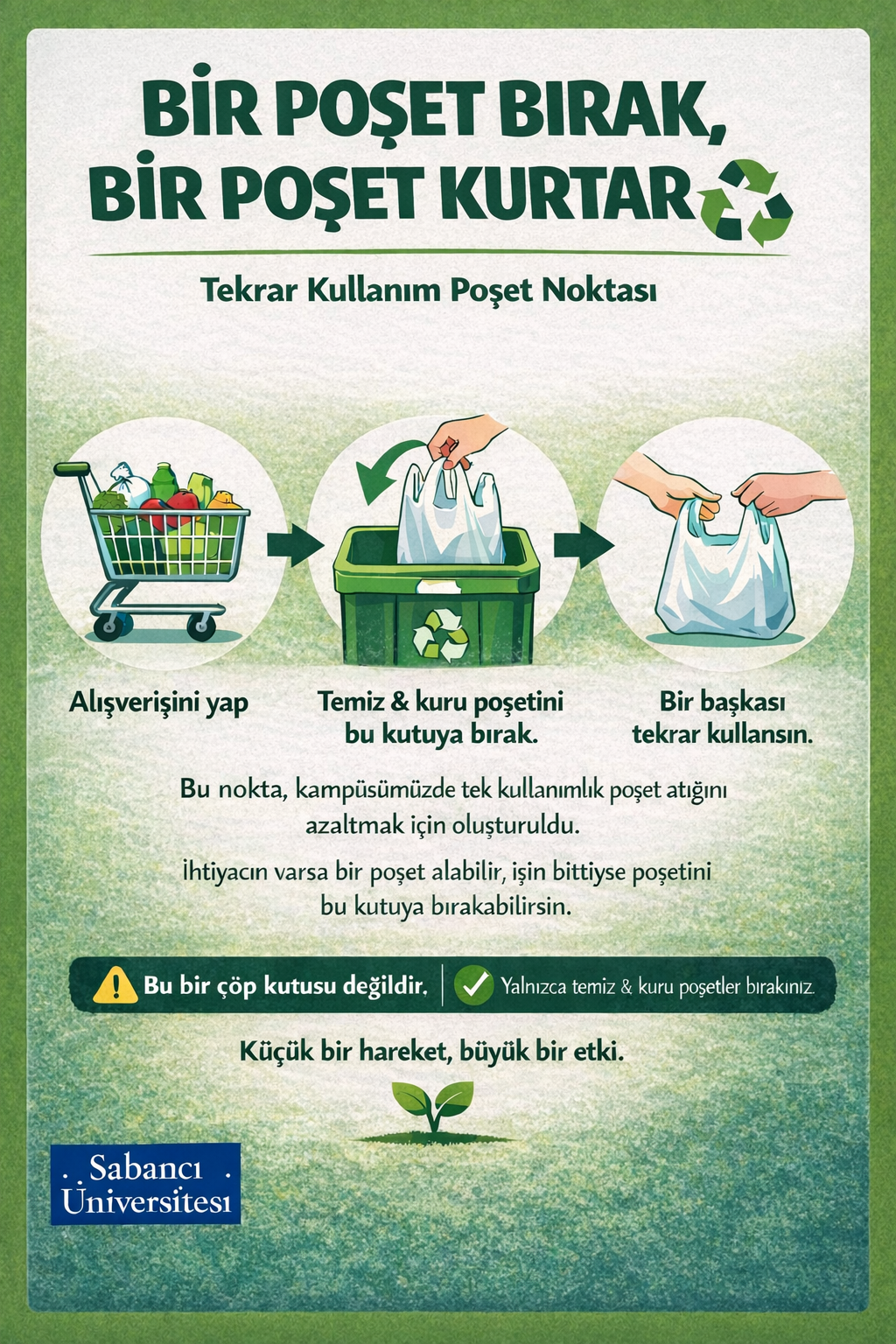
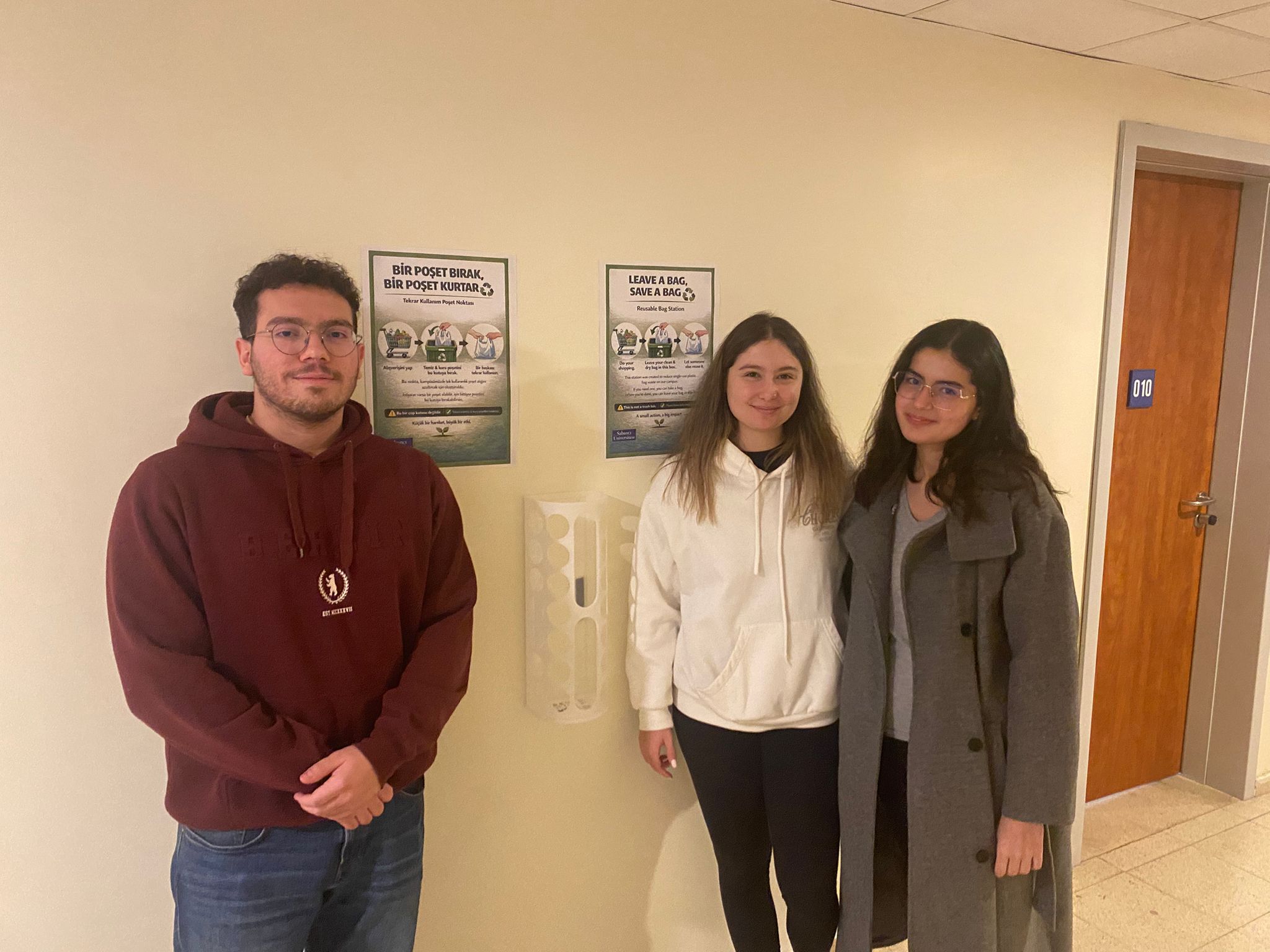
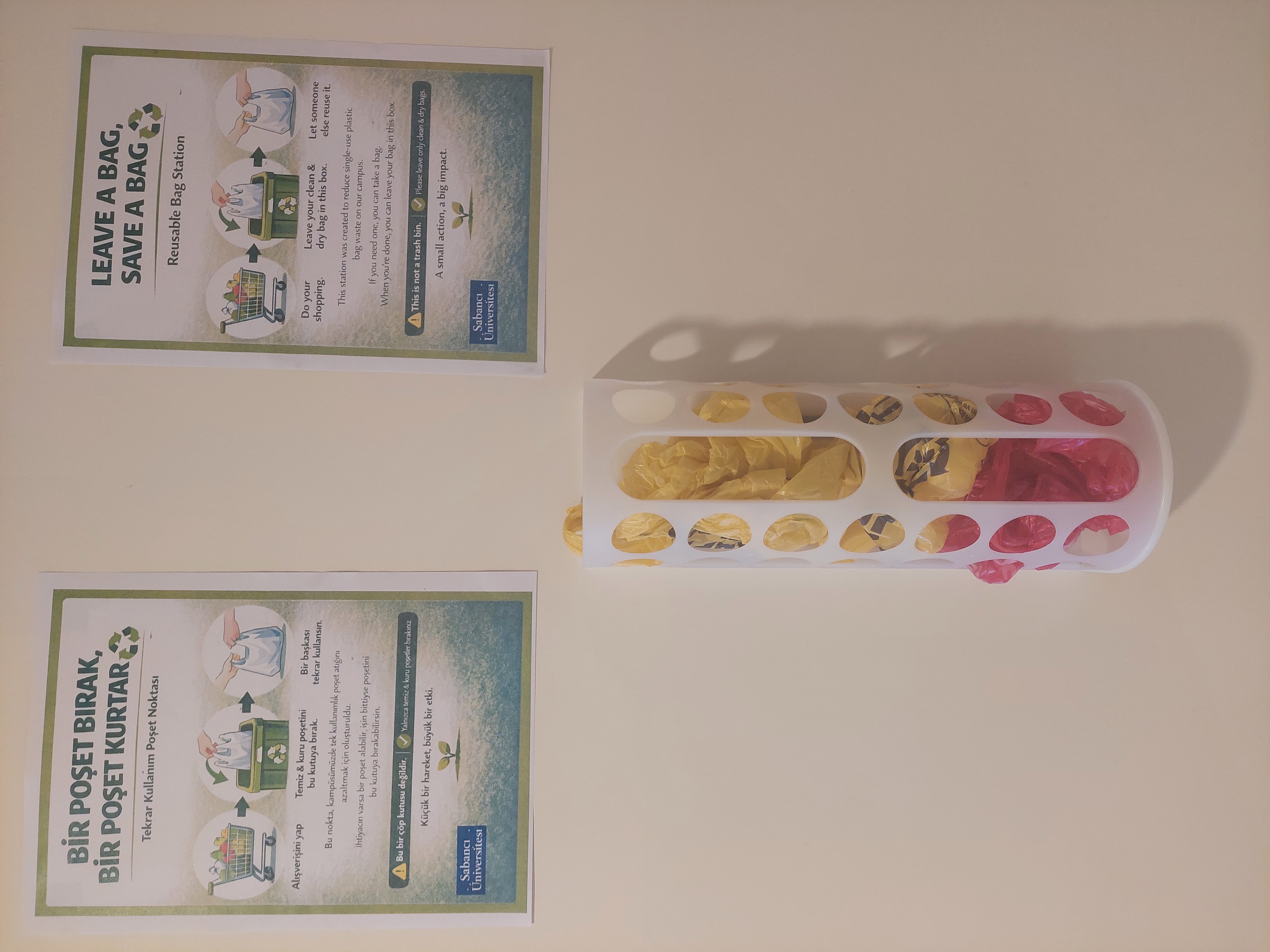
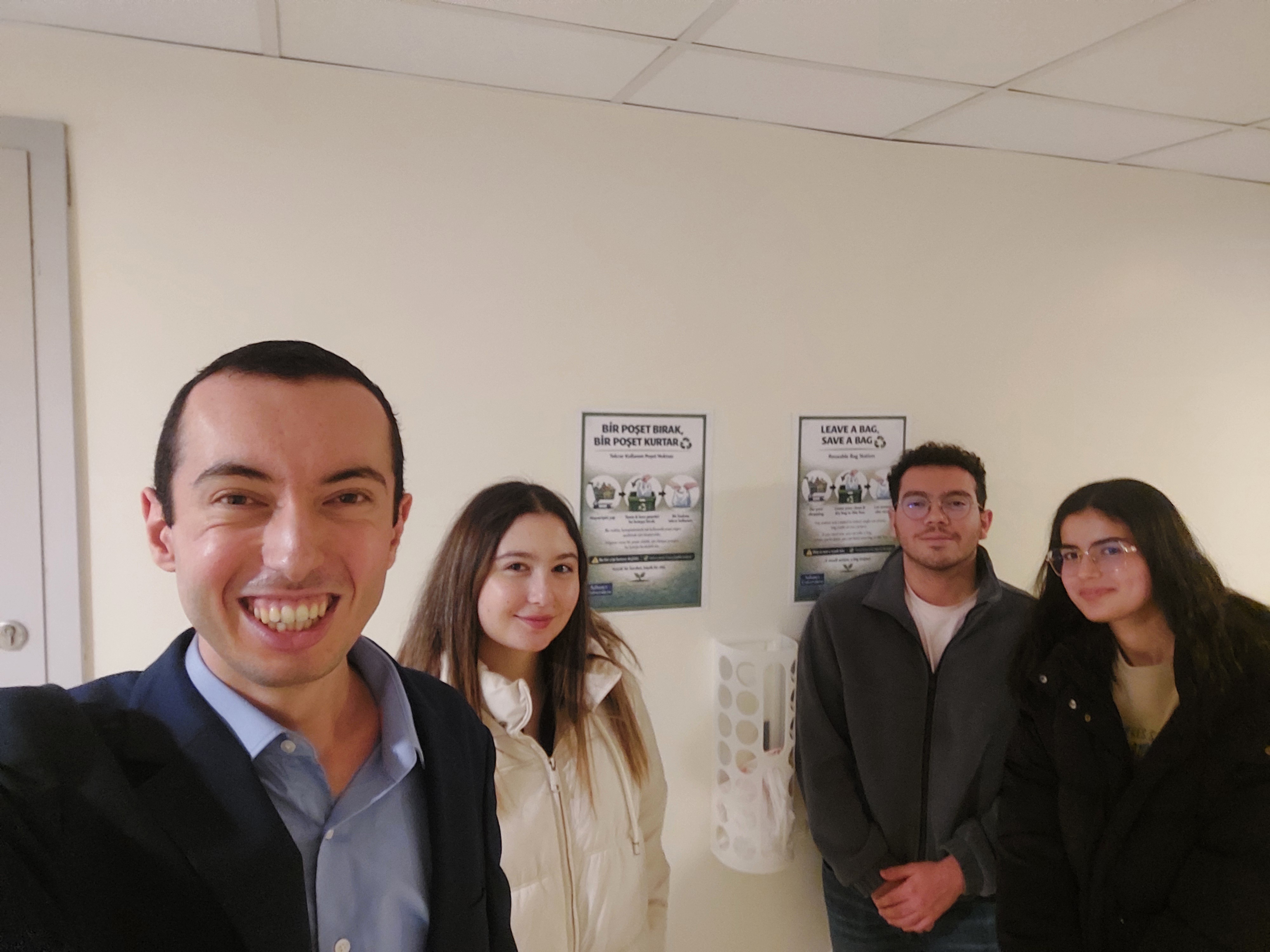
Our observations showed that many students in our university used plastic bags for a very short time and then discarded them. This clearly demonstrated how quickly single-use plastics were wasted and created a serious problem in terms of sustainability. Therefore, we placed the use of plastic bags and transforming these usage habits at the center of our project. Based on the problem we identified, we aimed to create small collection and sharing areas where single-use plastic bags could be reused and recycled, in order to reduce their consumption. To bring this idea to life, we contacted the Sustainability Office and relevant units, and then collected user opinions through a survey of approximately 100 people. Based on the feedback we received, we determined a pilot application area and shaped our solution with a user-centric approach.
This sustainability action taught us not only how to solve an environmental problem, but also the value of collaborative thinking, taking responsibility, and transforming ideas into concrete applications. At the end of the term, everyone in our group completed this process saying "I'm so glad I did," and seeing that our project created a small but meaningful impact on campus life was our greatest gain.
And this was just the beginning…